One Thousand Poets
BEZNI process image
BEZNI process image
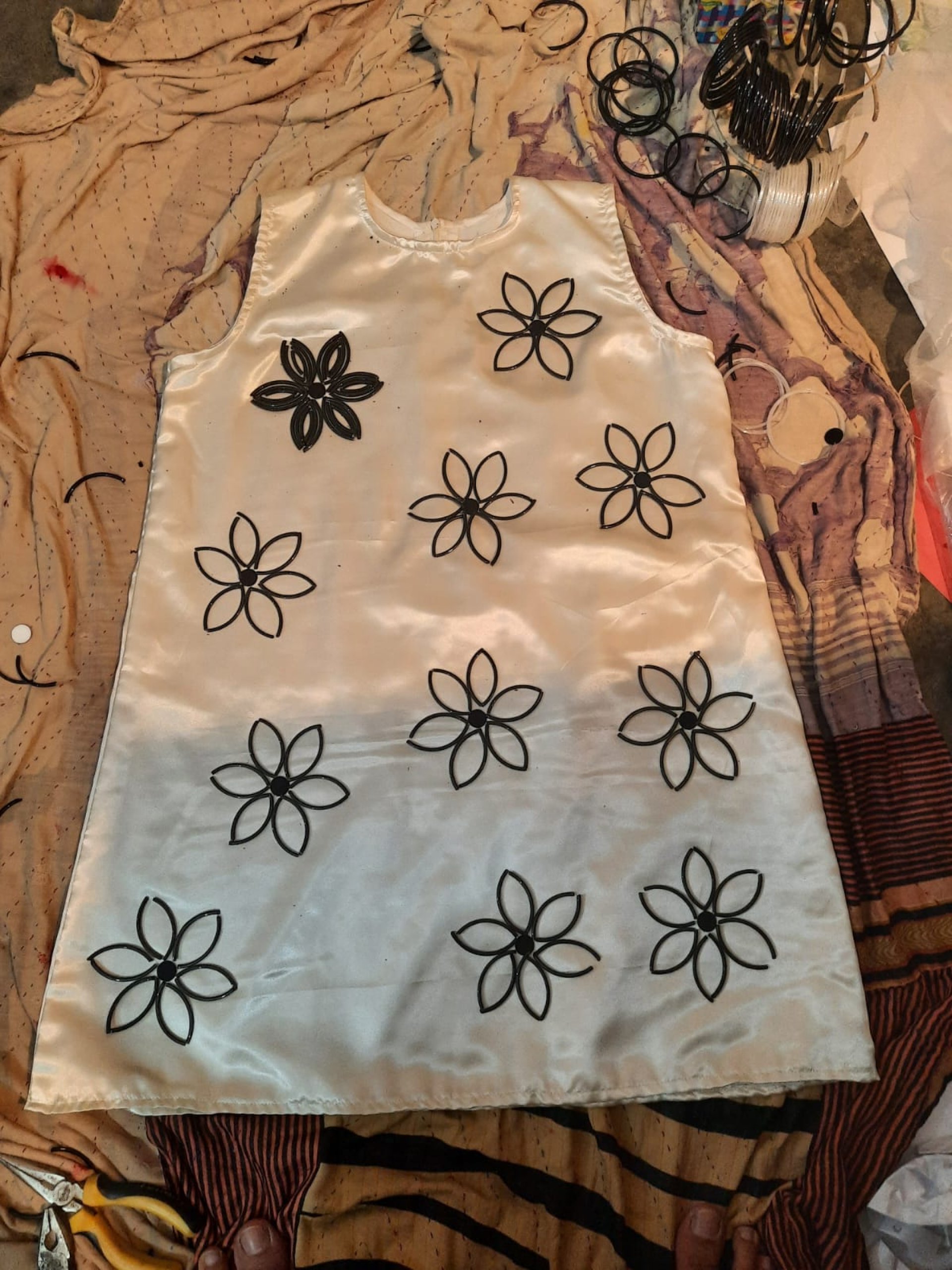
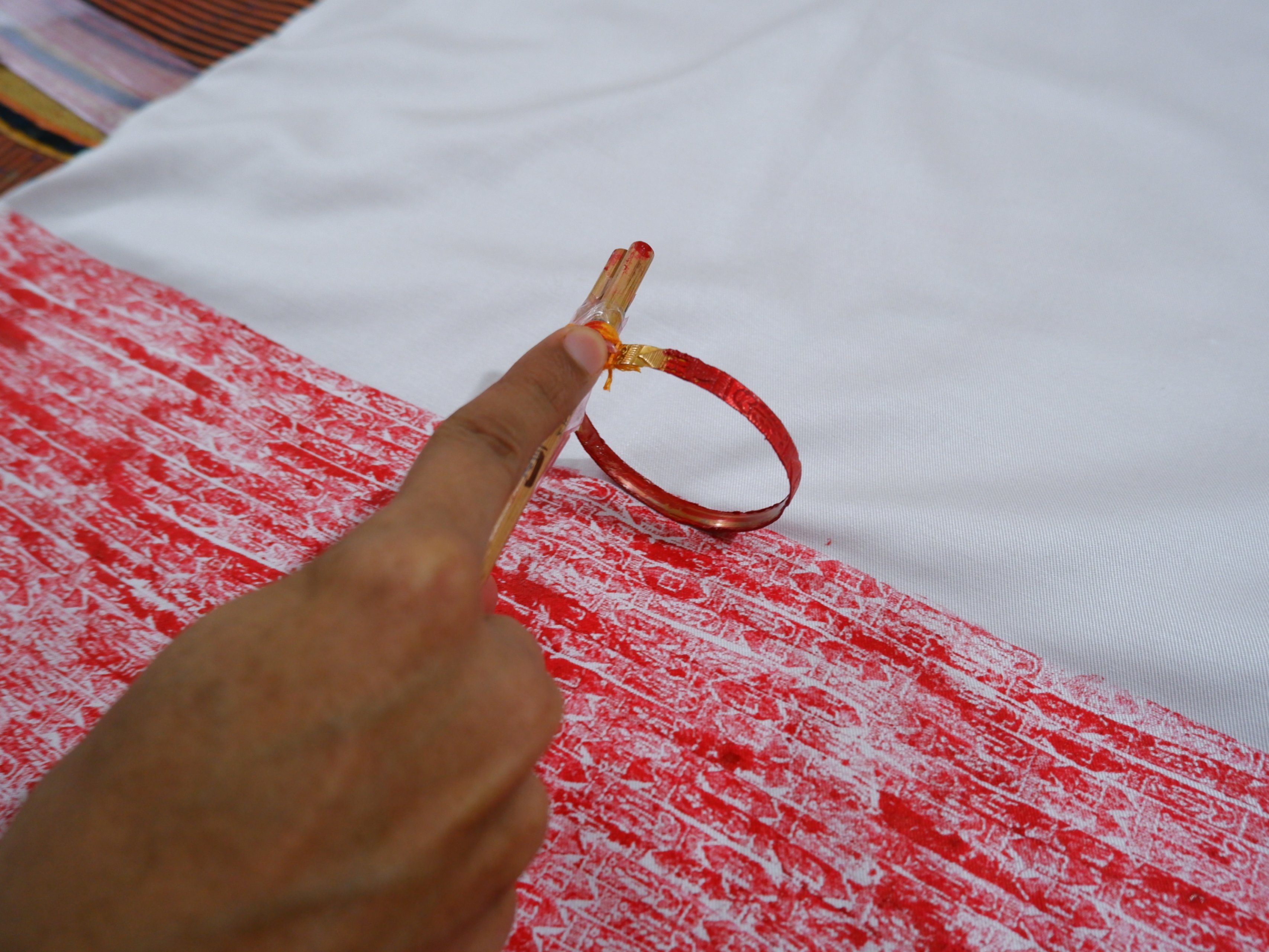
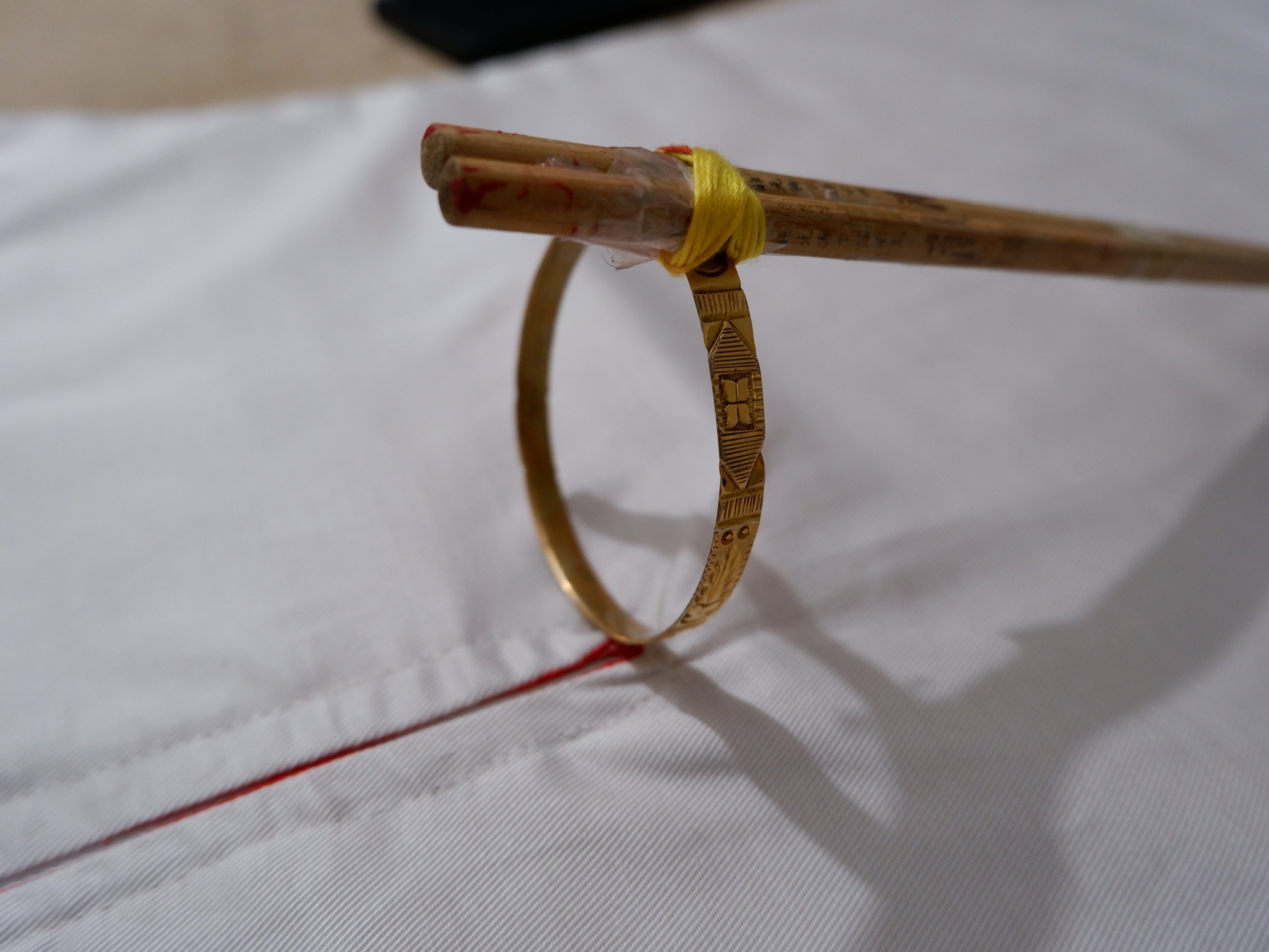
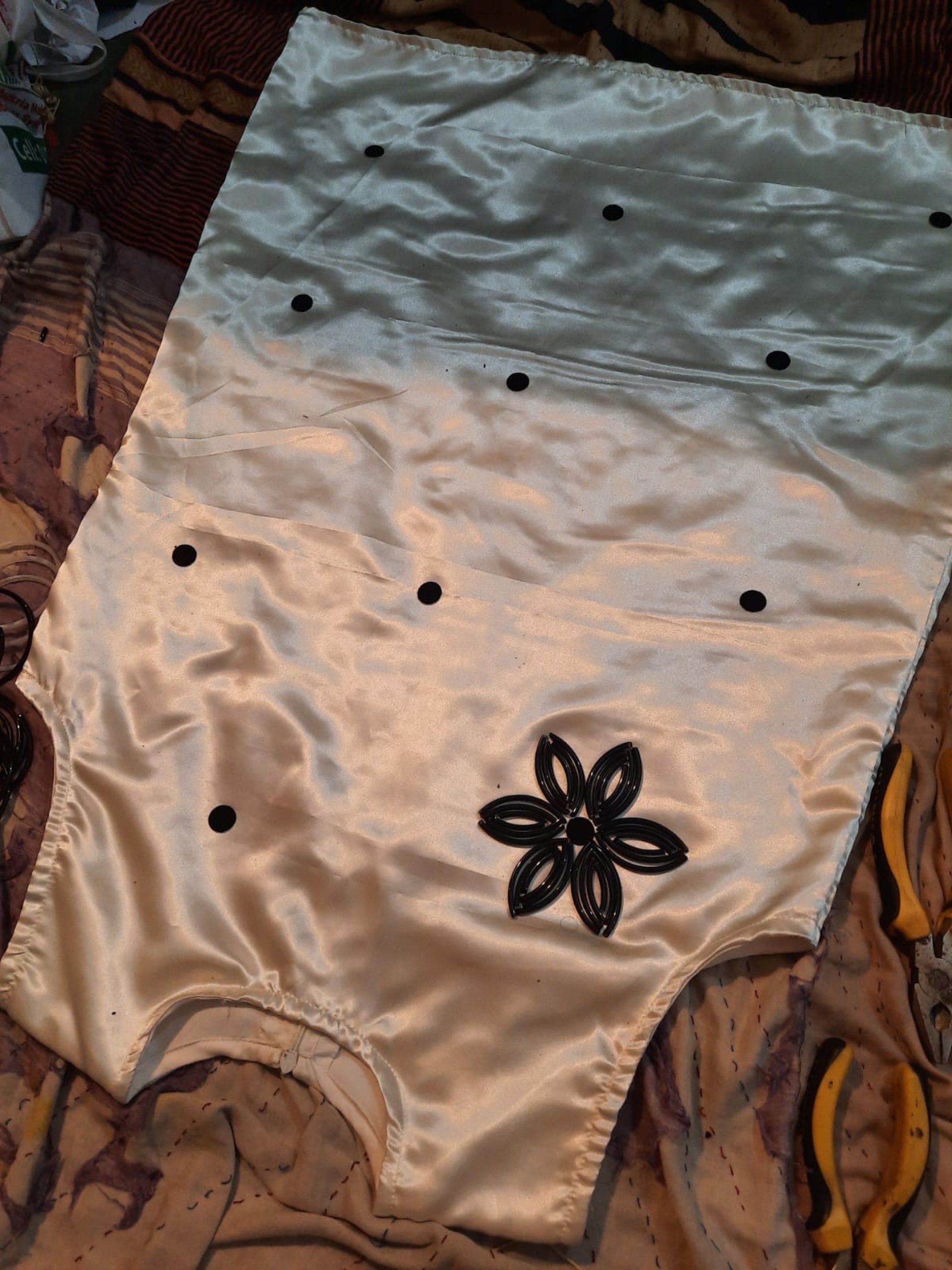
This is a hand-printed dress. A simple white A-line dress was used as the base garment. I took my mother’s bangles—the same bangles she wore when I was a child. I remember how, while sleeping on her arms, these bangles would leave imprints on my cheek the next morning. To create the prints, I laid the garment flat and applied red paint on a plain surface. Then, I rolled the bangles in the paint to gather color on their surface. Afterward, I rolled the bangles by hand across the white dress, creating lines one by one. This process left the same imperfect imprint on the dress as the marks I once wore on my cheeks as a kid on a childhood morning.
BEZNI process image
BEZNI process image
BEZNI process image
BEZNI process image
BEZNI process image
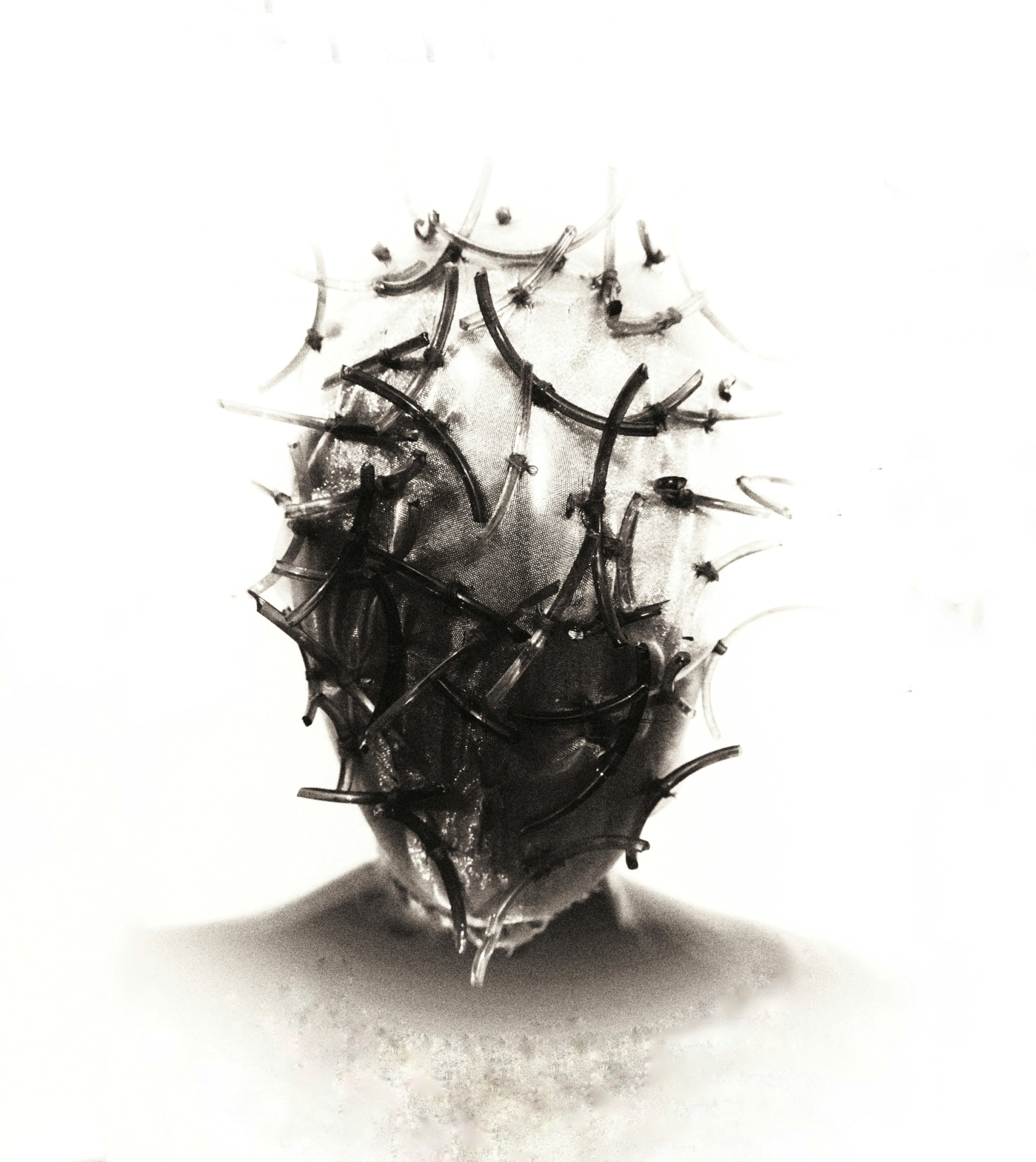
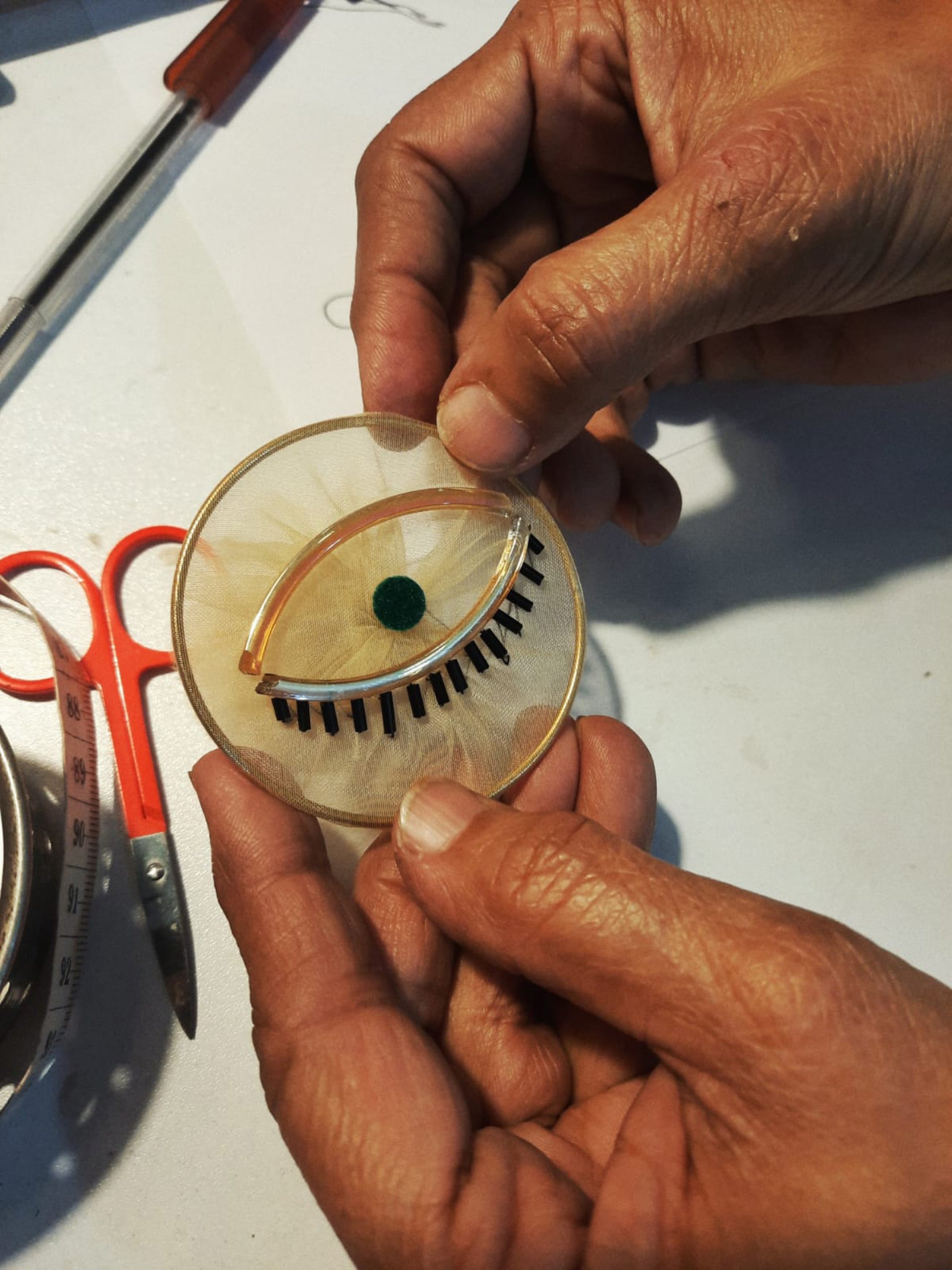
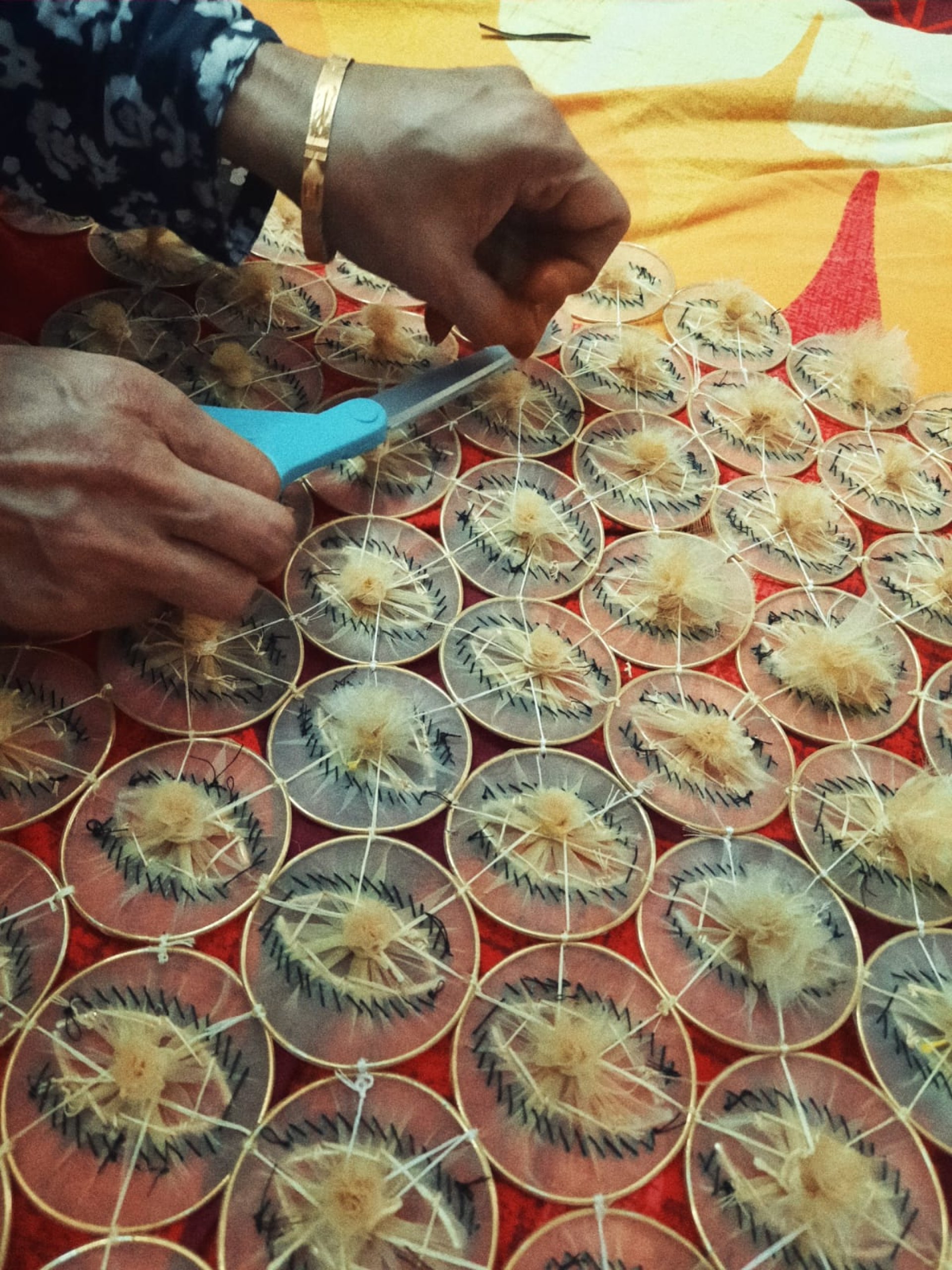
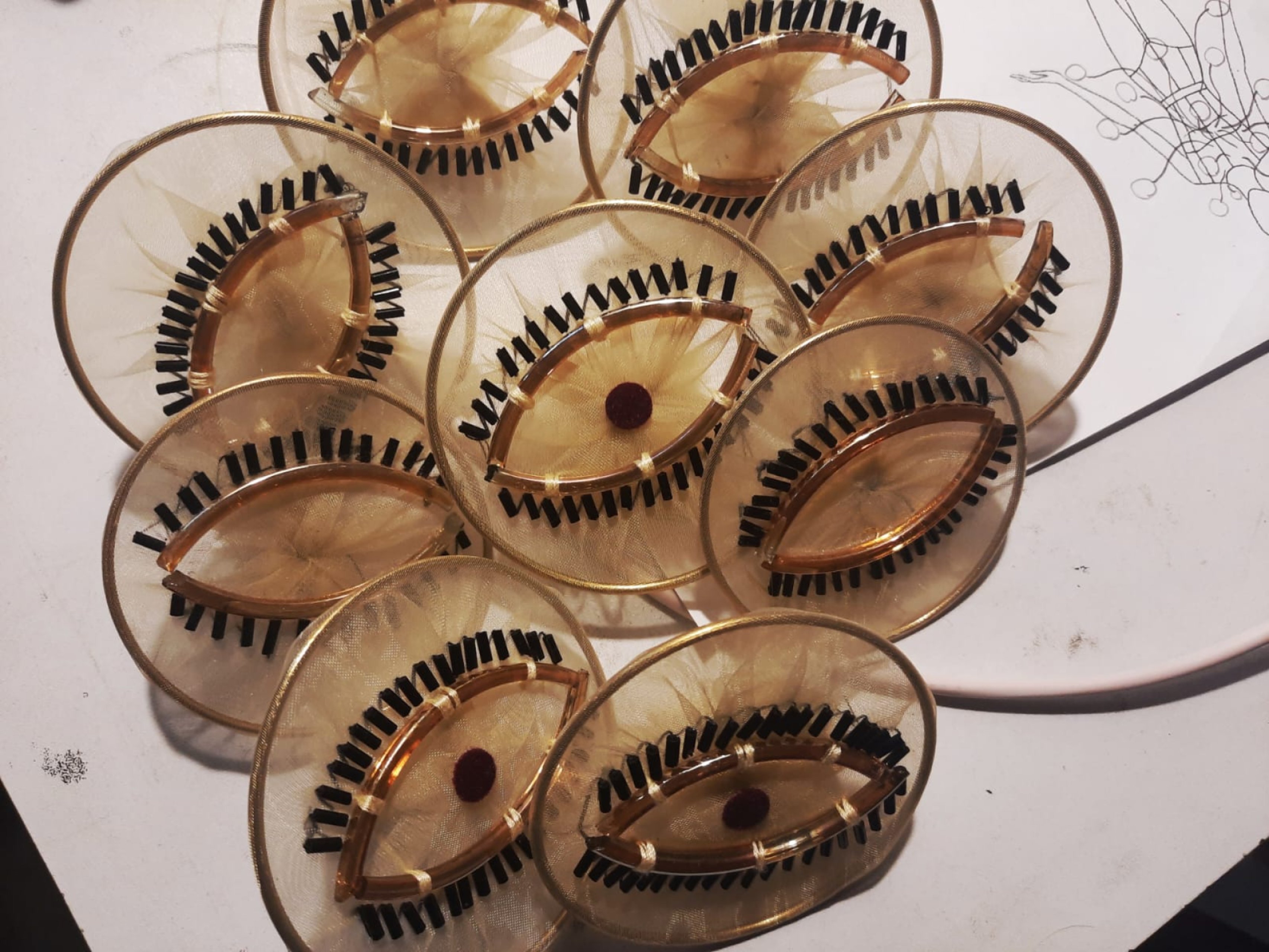
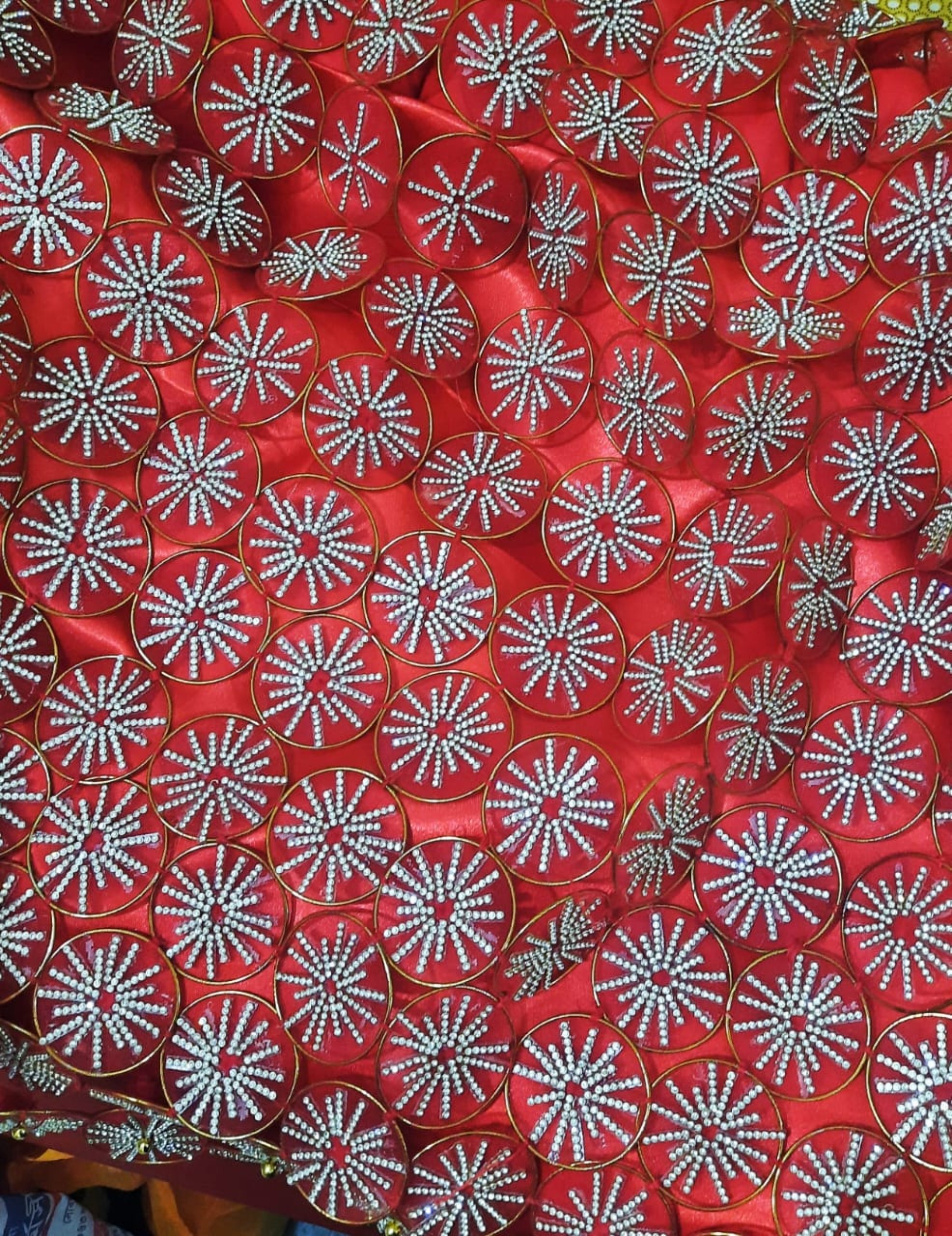
This golden dress is made of 500 steel bangles. Later, tulle was wrapped around it to give it its core form. After that, golden-colored glass bangles were broken into curved shapes to create an eye. Each piece was then individually polished and stitched onto the structure. Forty beads were hand-stitched to create the eyebrow effect. A total of 13,000 beads were hand-stitched. Finally, a round circle, known as a 'tip' (টিপ), was placed in the center to form the eyeball. Once completed, all the finished bangles were attached to one another according to the dress’s pattern. Finally a beige lining was used to set the undertone of the garment. It took 85 hours for the completion of this dress.
BEZNI process image
BEZNI process image
BEZNI process image
BEZNI process image
BEZNI process image
BEZNI process image
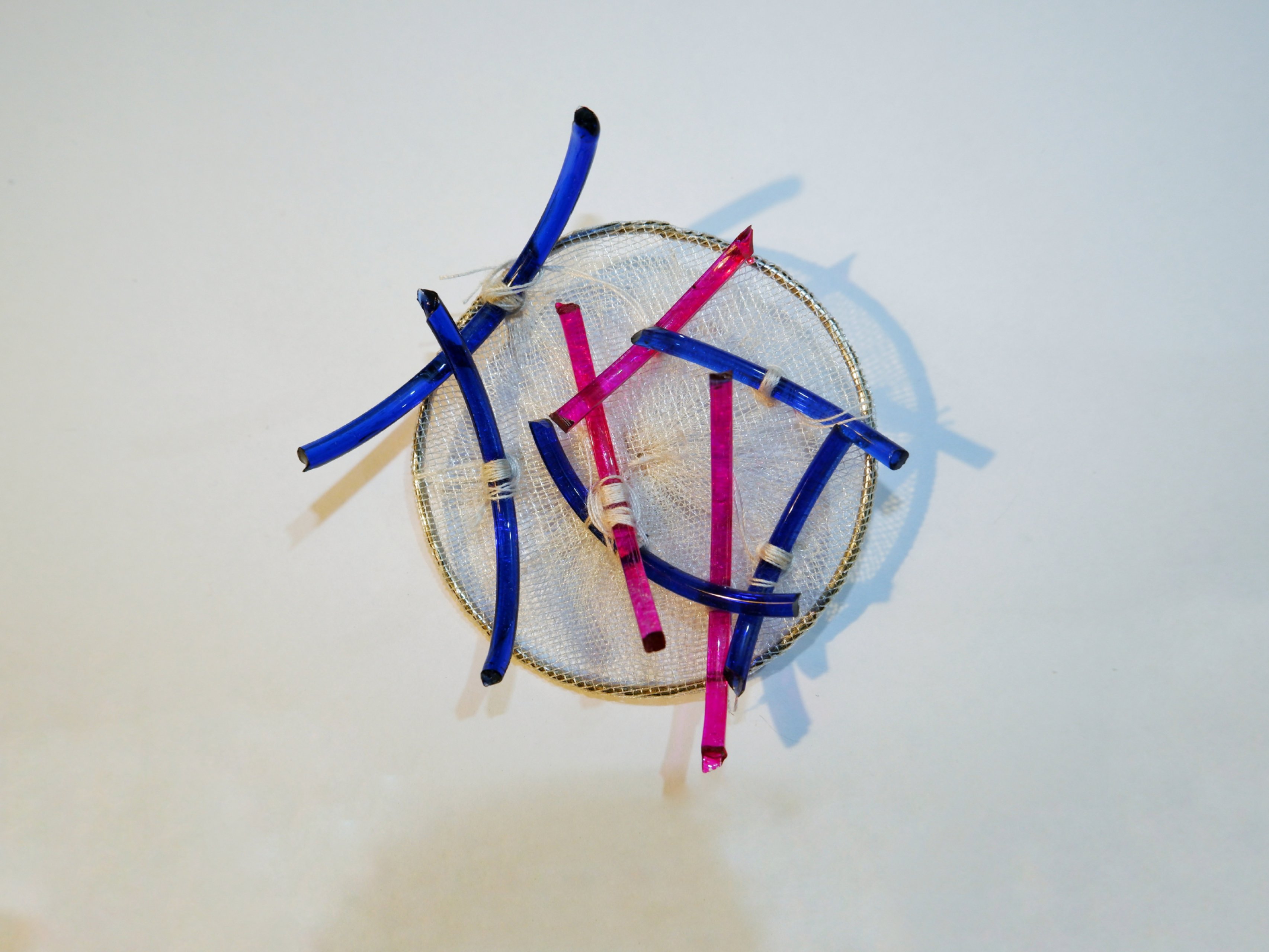
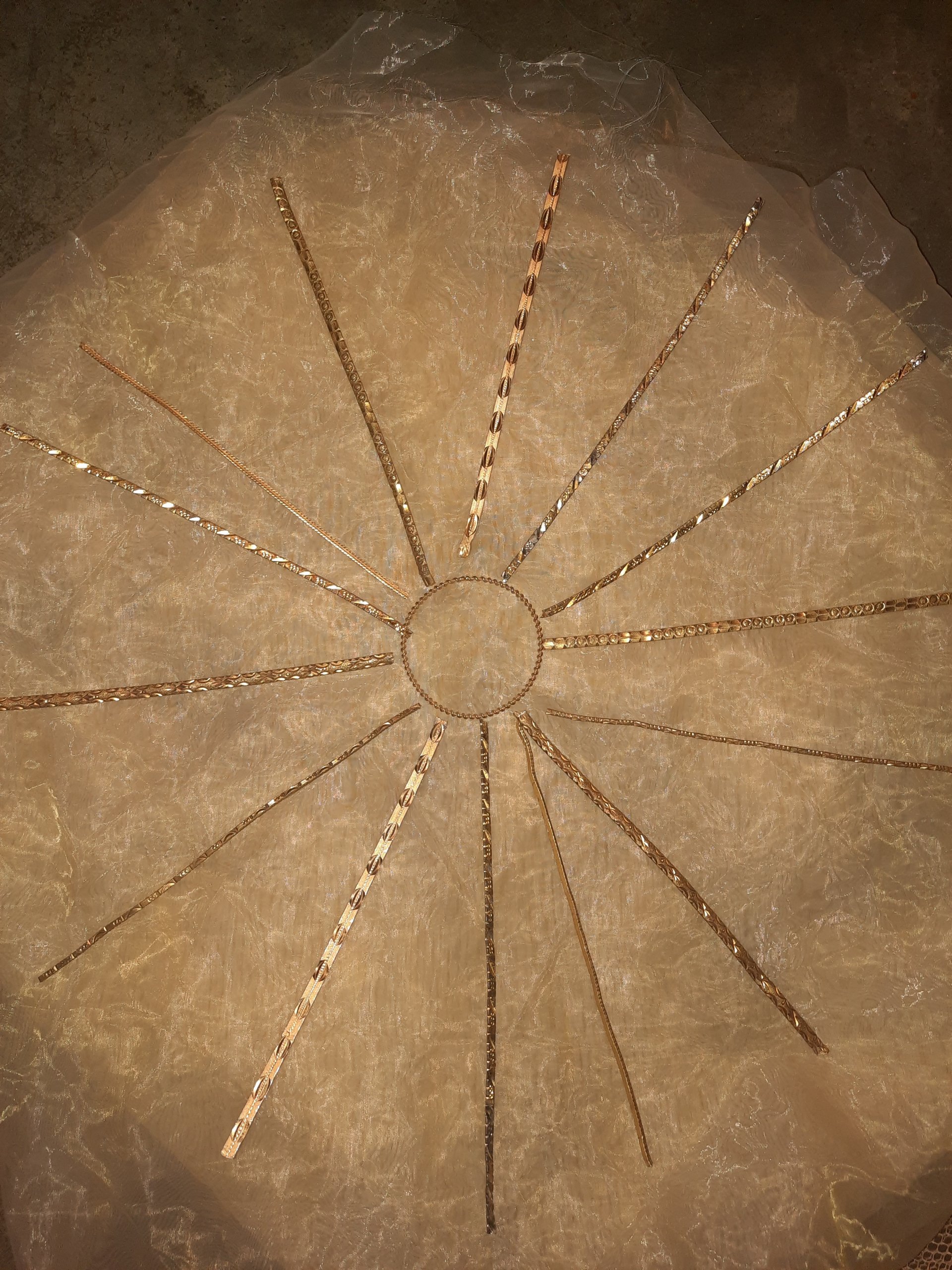
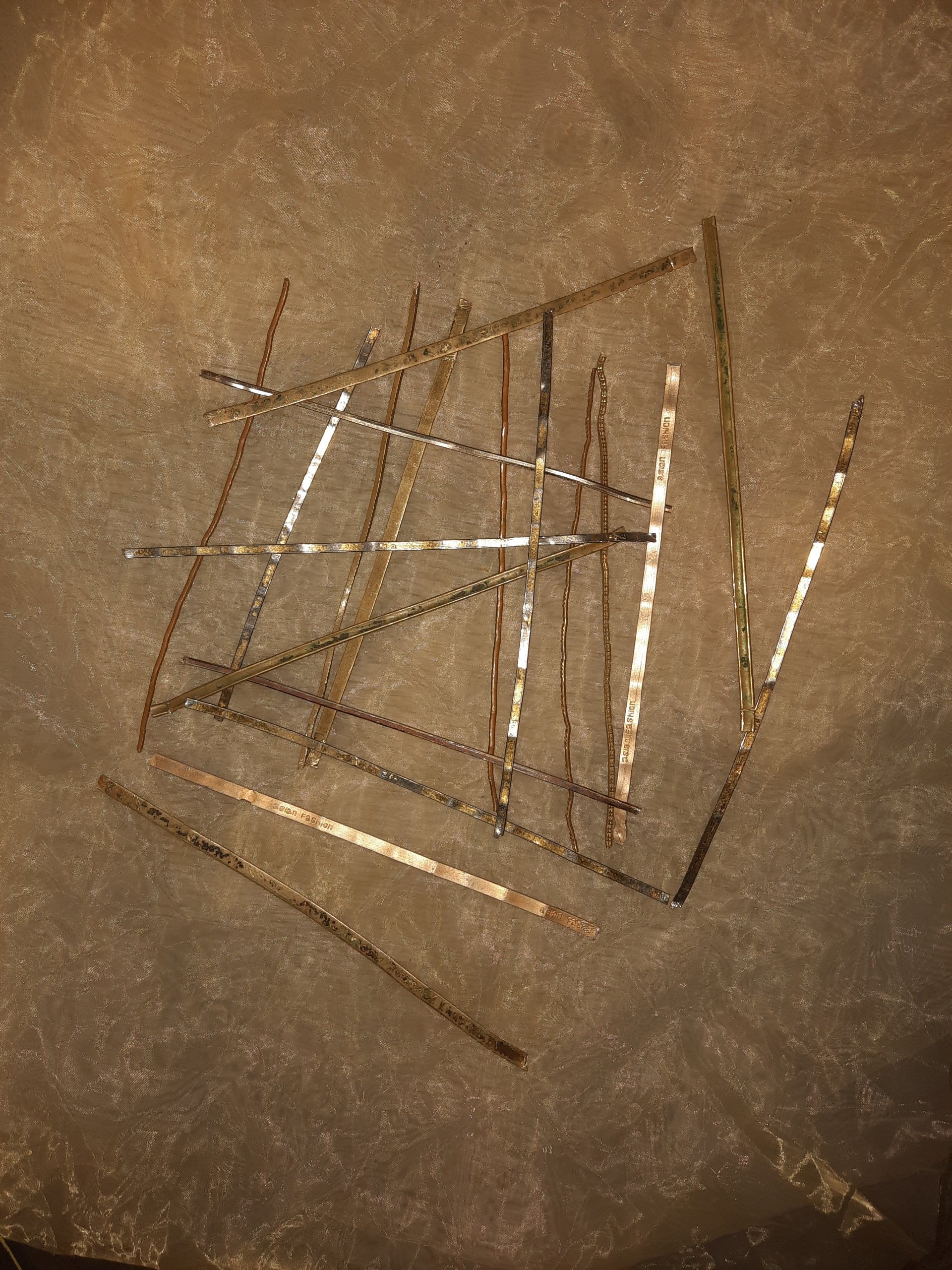
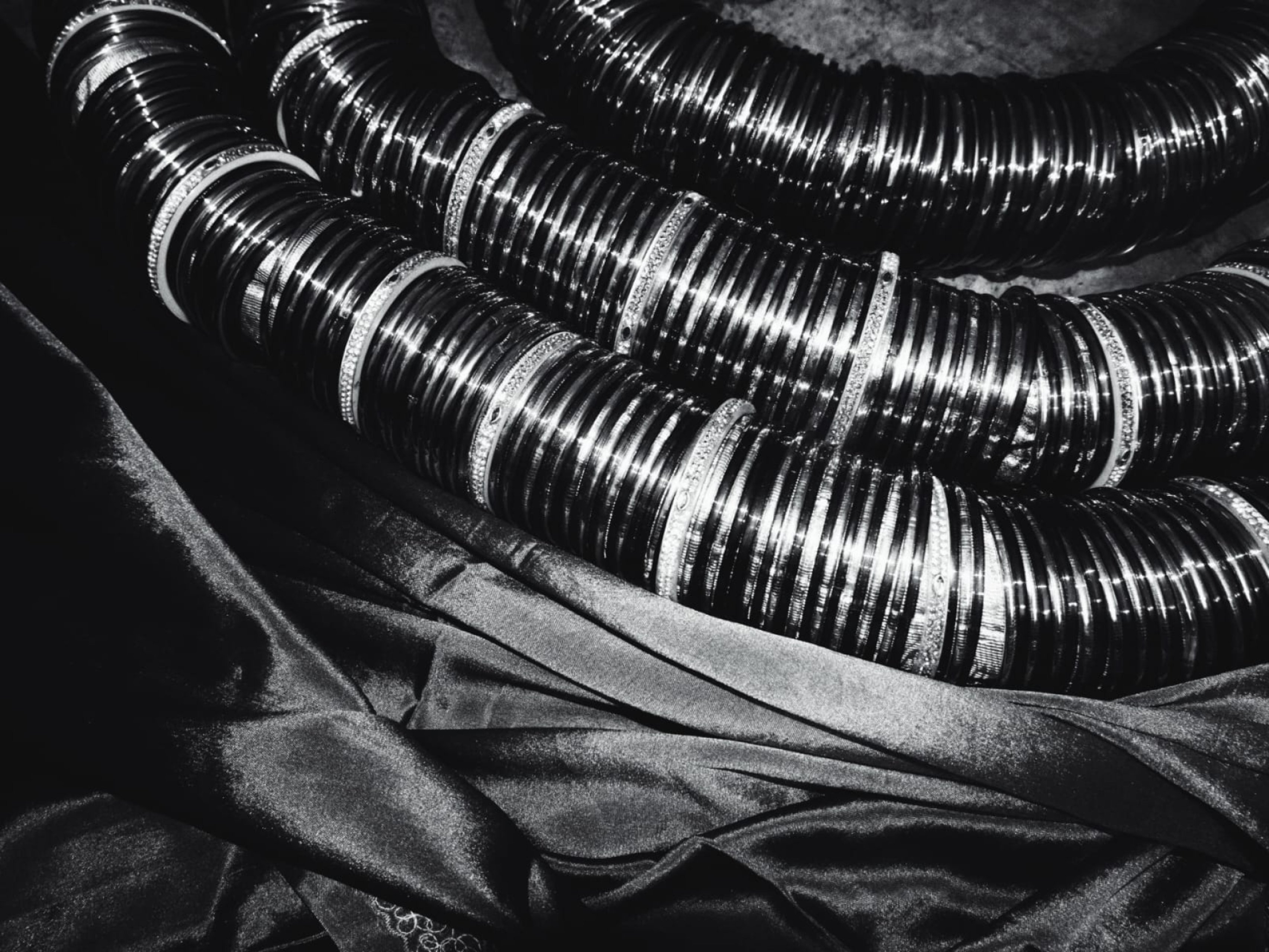
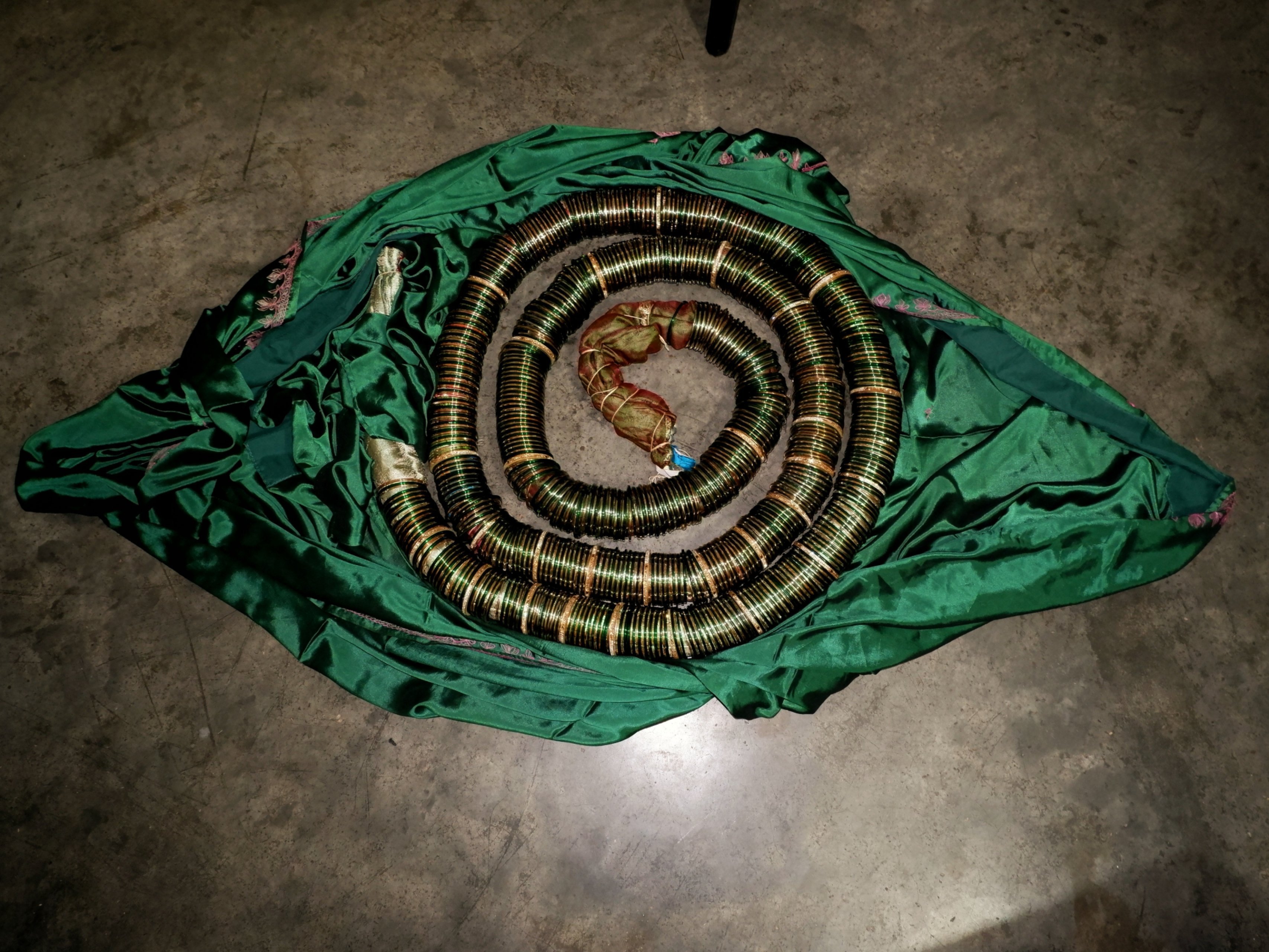
This is a sculpture that I created for the collection Bezni. It consists of bangles worn by my mother, her sisters, and my grandmother. I collected these bangles, which they have used for many years. These bangles are made of brass. I cut the bangles, straightened them, and turned them inside out, revealing a very private chemistry to the outside world. I was thinking of the intimacy that lies within an ornament and our skin—the constant rub of the material on our skin. Despite the outer part being ornately decorated for our eyes, the inner layer holds a beauty that remains undiscovered. I then created a sun symbol as a reflection of the influence these women have had on me and staying true to the original shape of the object.
BEZNI process image
BEZNI process image
BEZNI process image
BEZNI process image
BEZNI process image
BEZNI process image
BEZNI process image
This is a hand-printed dress. A simple white A-line dress was used as the base garment. I took my mother’s bangles—the same bangles she wore when I was a child. I remember how, while sleeping on her arms, these bangles would leave imprints on my cheek the next morning. To create the prints, I laid the garment flat and applied red paint on a plain surface. Then, I rolled the bangles in the paint to gather color on their surface. Afterward, I rolled the bangles by hand across the white dress, creating lines one by one. This process left the same imperfect imprint on the dress as the marks I once wore on my cheeks as a kid on a childhood morning.
BEZNI process image
BEZNI process image
BEZNI process image
BEZNI process image
BEZNI process image
BEZNI process image
BEZNI process image
BEZNI process image
BEZNI process image
BEZNI process image
BEZNI process image
BEZNI process image
BEZNI process image
BEZNI process image
BEZNI process image
BEZNI process image
BEZNI process image
BEZNI process image
BEZNI process image

BEZNI PROCESS

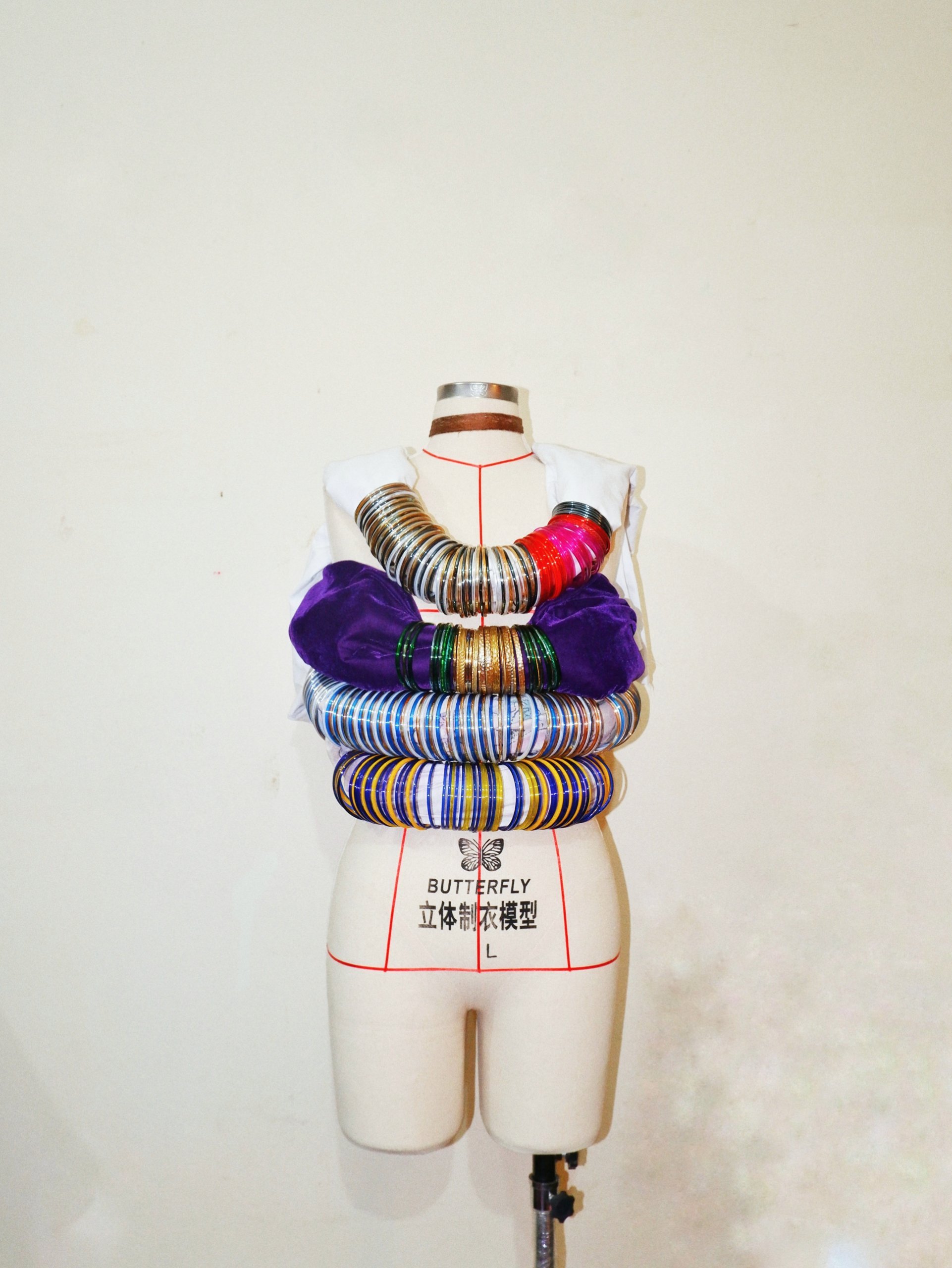
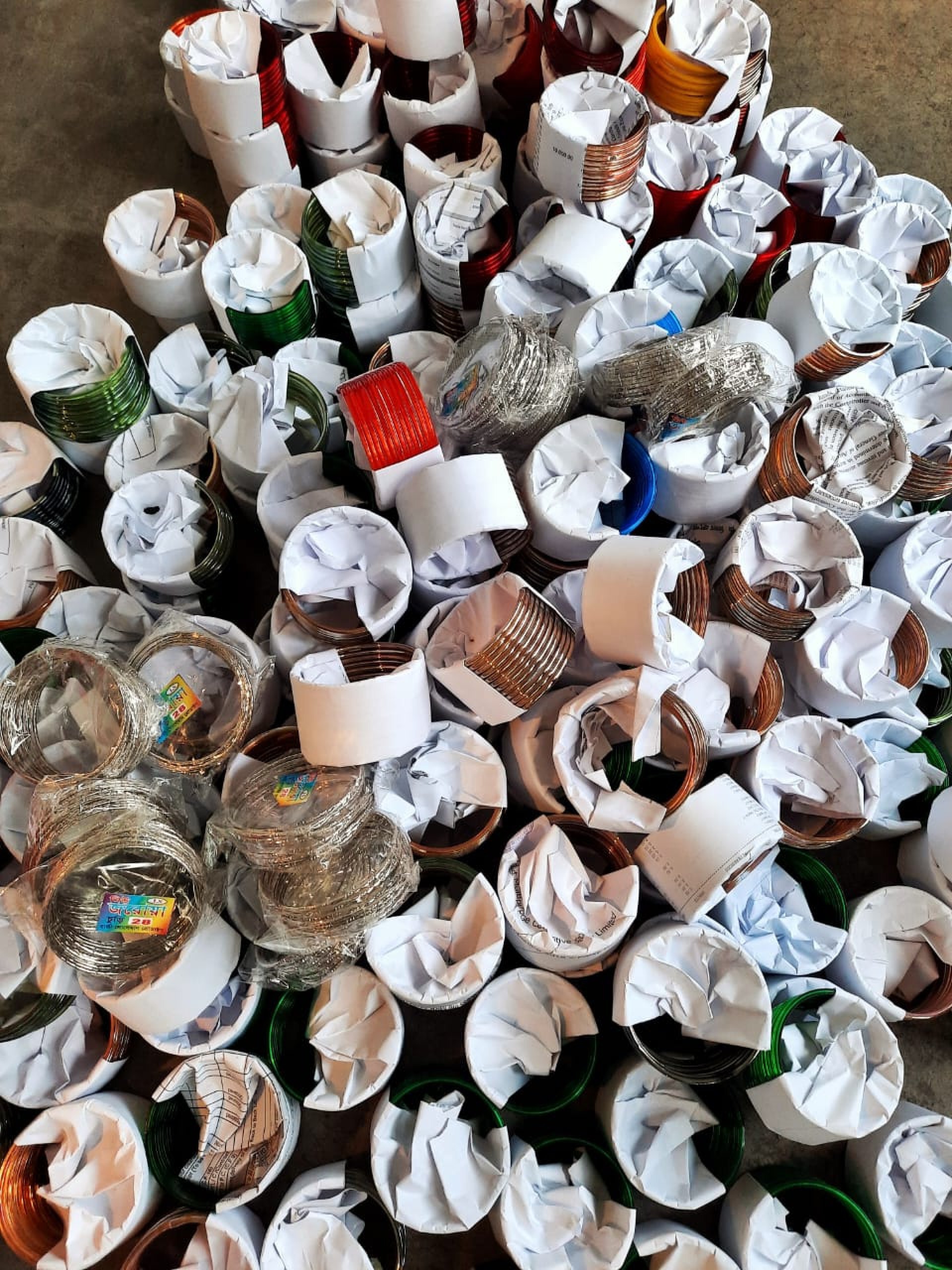
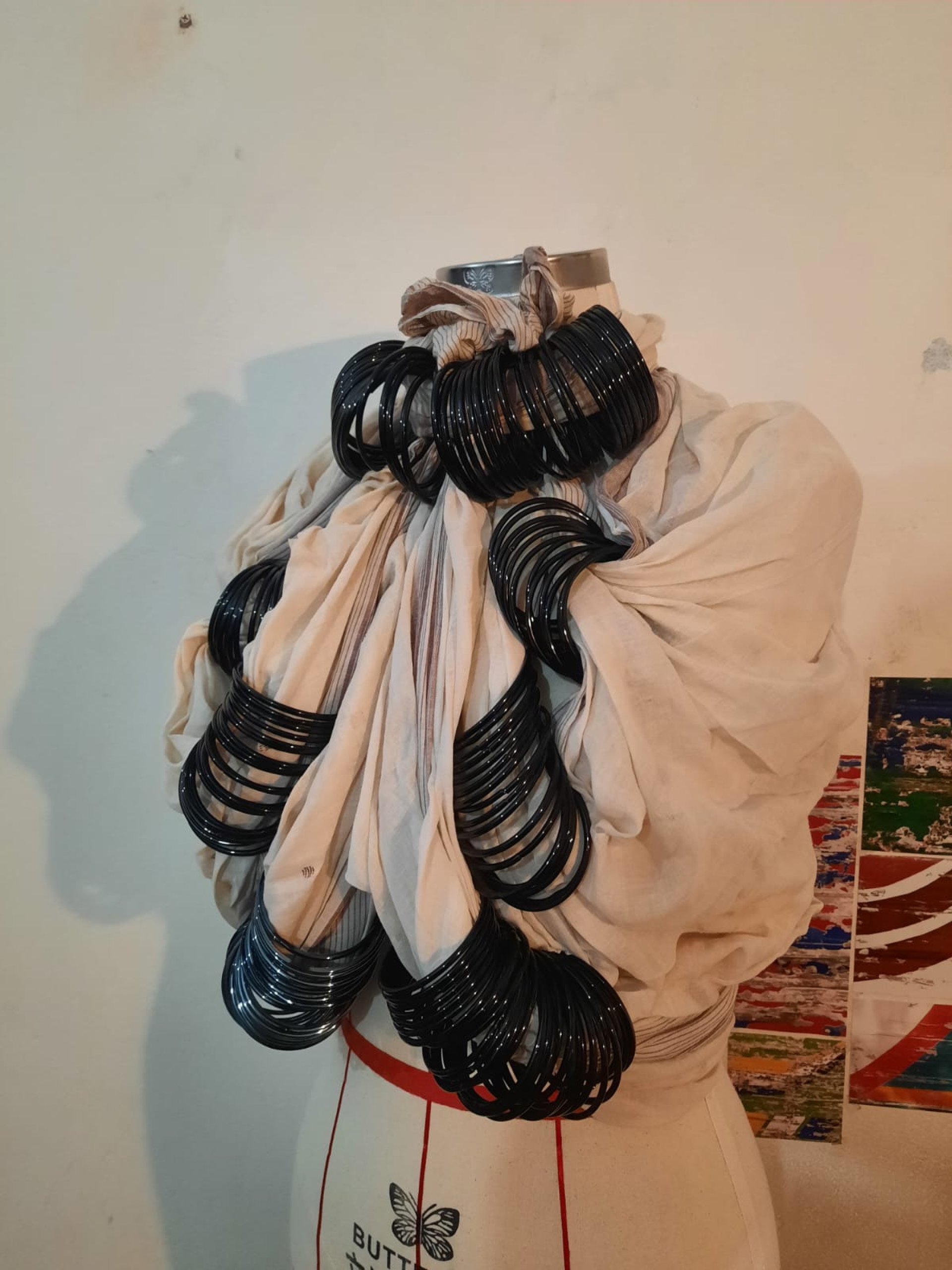
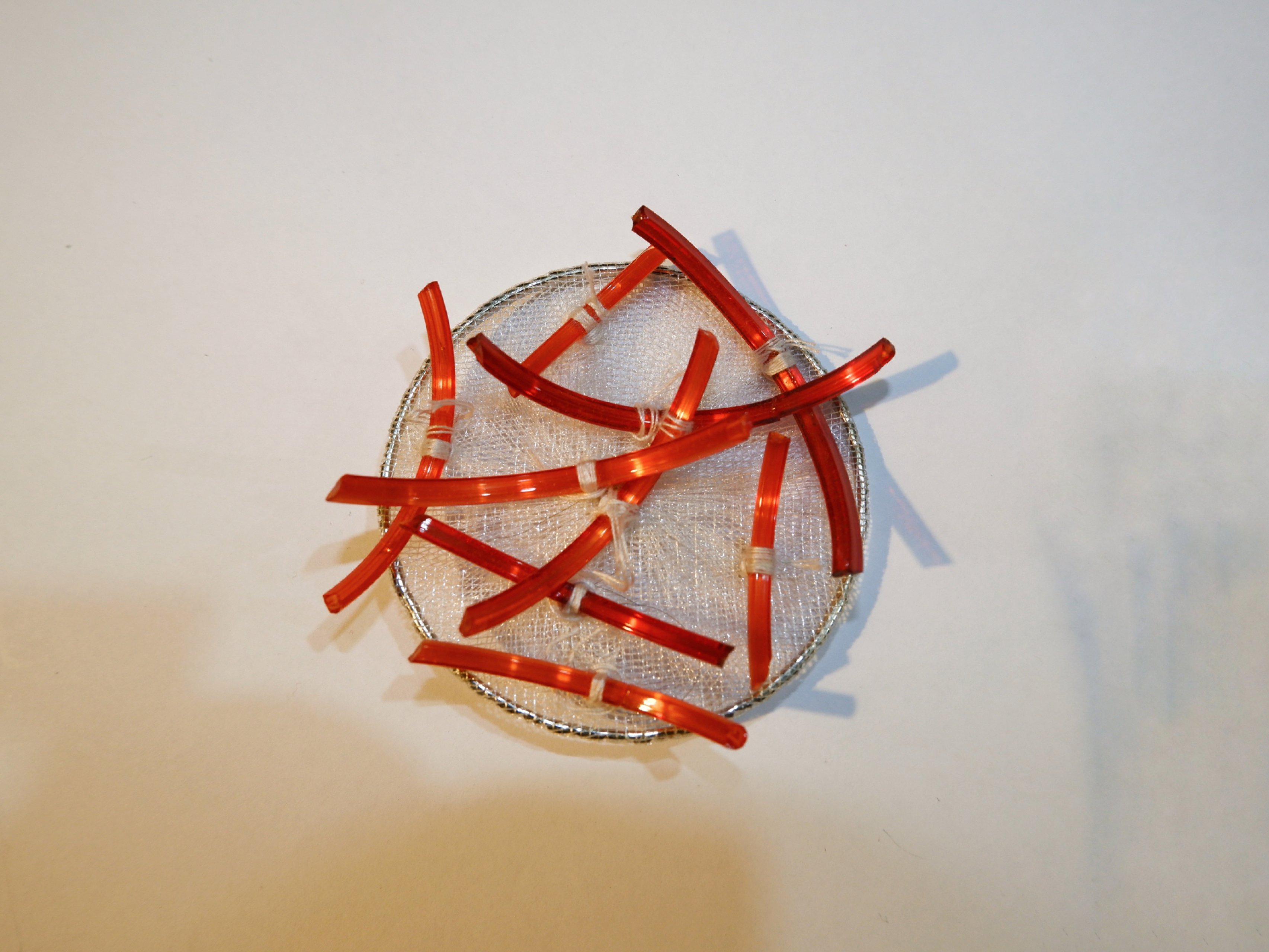
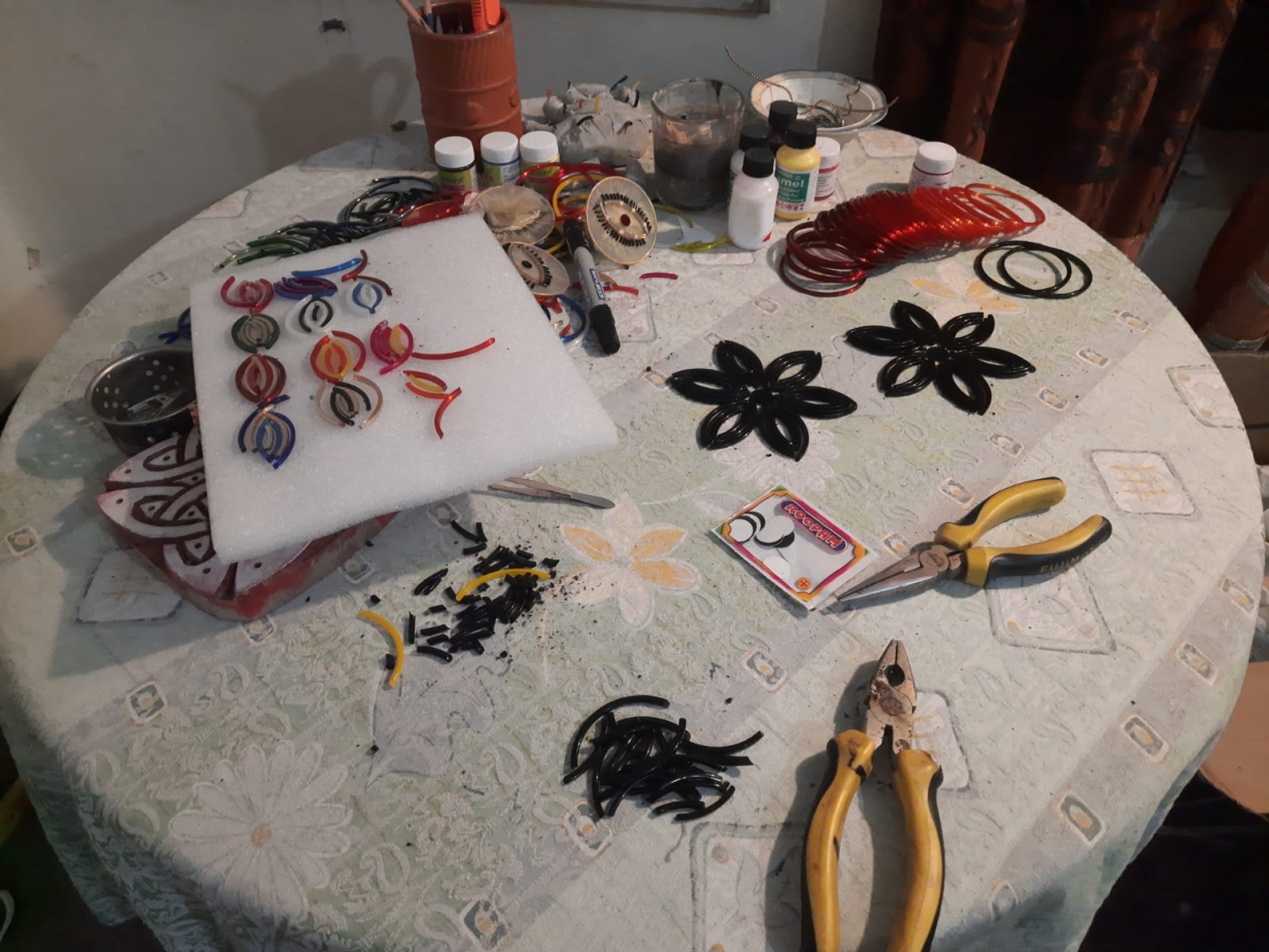
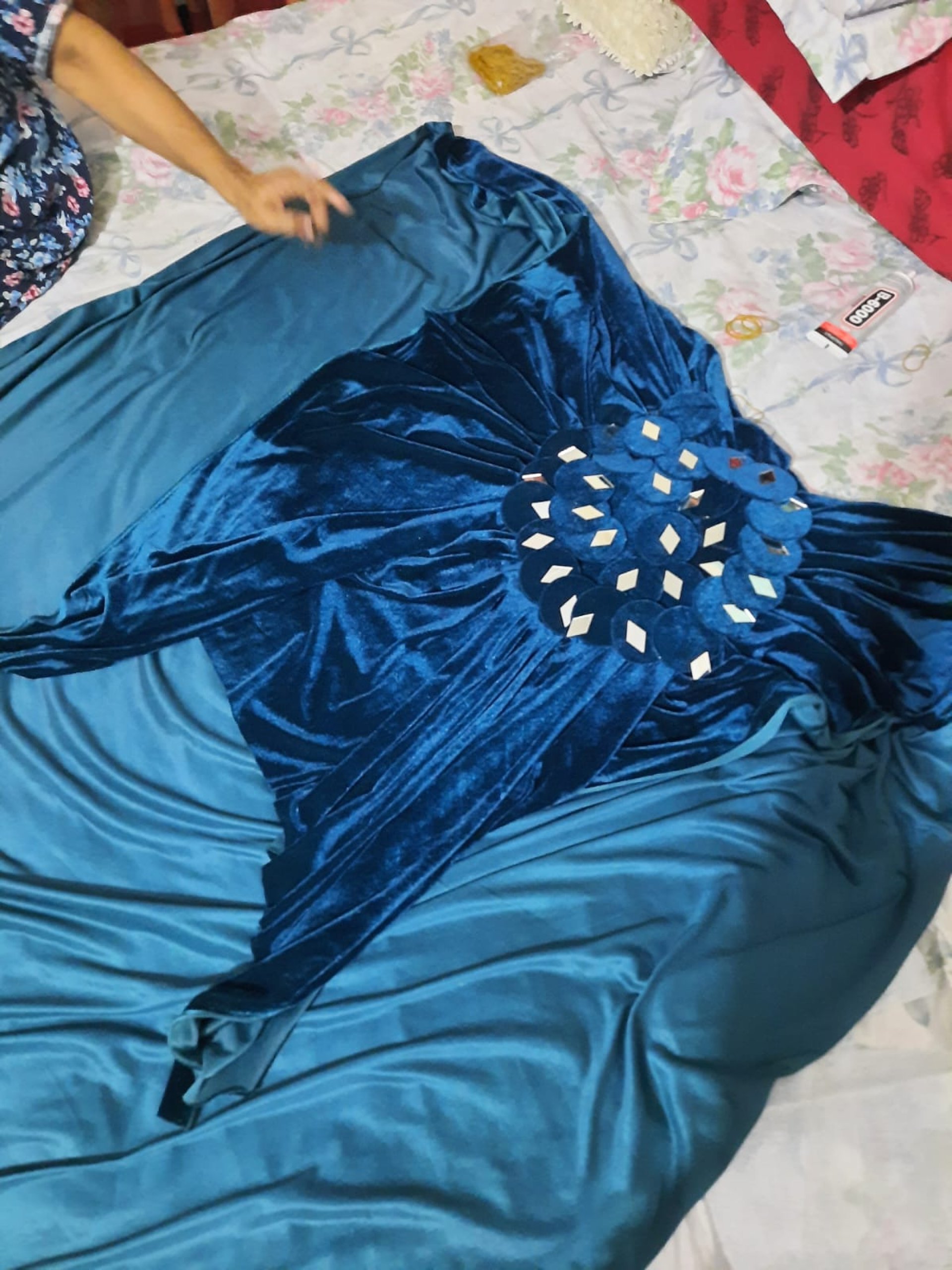
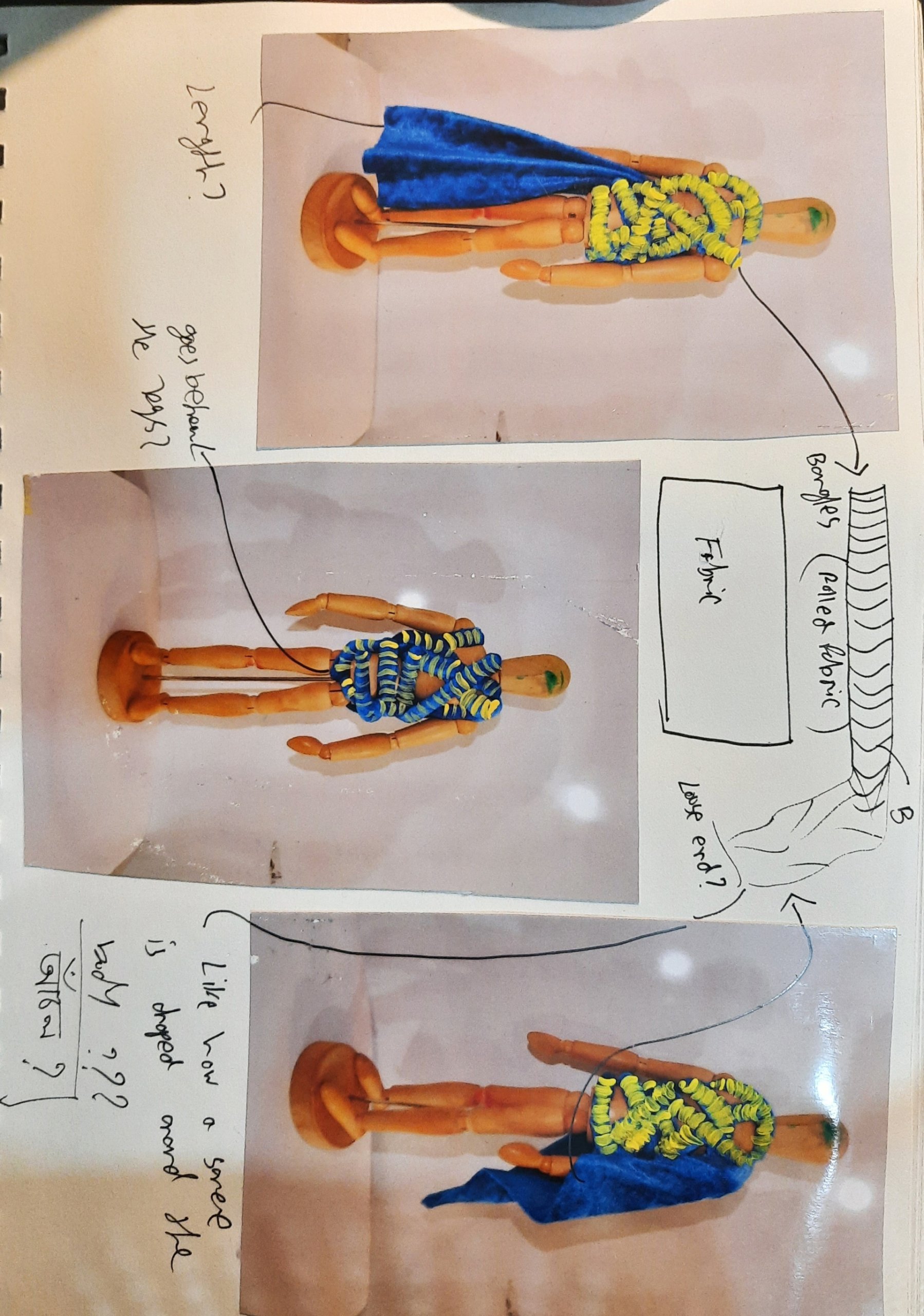
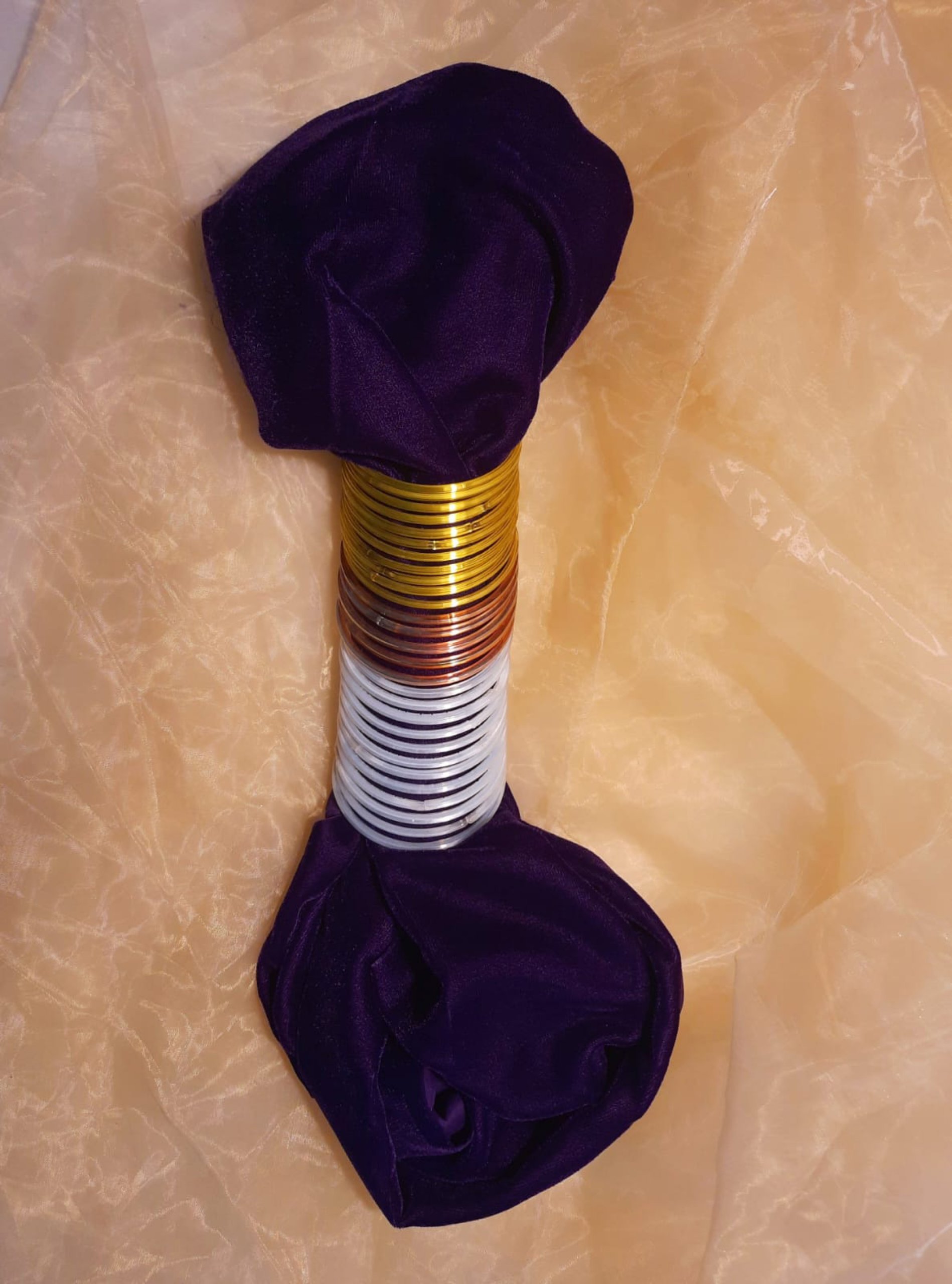
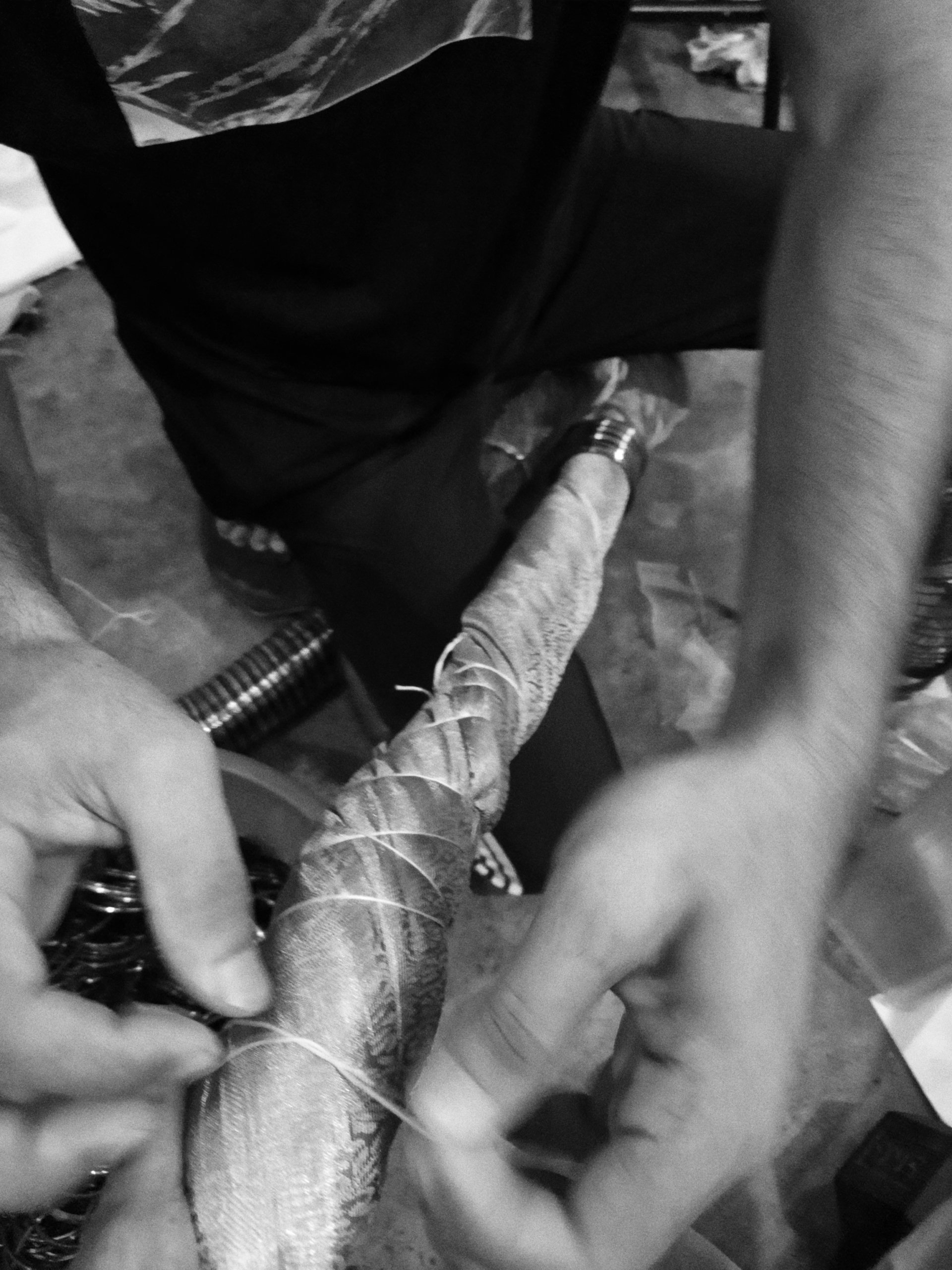
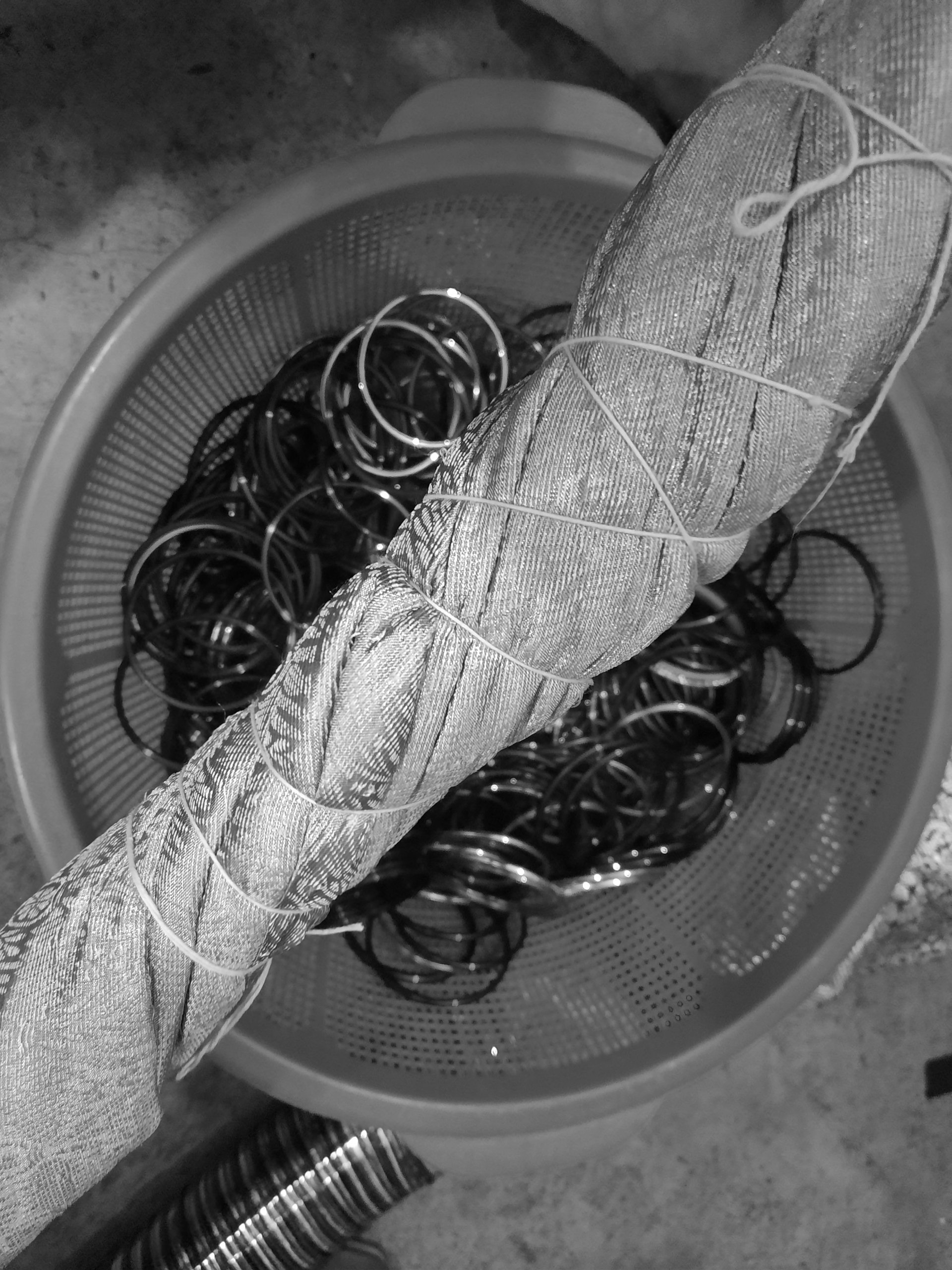
When I was a child, I loved resting my head on my mother's arm as we slept. Sometimes, her bangles made it uncomfortable, leaving imprints on my cheeks by morning. This simple event has become a core memory, one I often reflect upon. These adornments, which encircle wrists, also embody the essence of the whole body. My initial inspiration stemmed from a wall mat made by my grandmother, and since then, I've delved deeper, uncovering connections and exploring this material further. In my collection, I employed various techniques centered around bangles. These techniques include wrapping them in tulle, breaking them down, bending them into new forms, flattening, welding, and manipulating fabric through the constraint of bangles. I even hand-printed a dress using the same bangles my mother wore, where the story began. Each piece in the collection carries its distinct method, all contributing to a collective story. "Bezni" delves into the history, heritage, and bodily connection of bangles, driven by their influence on my memory. Bangles in my creation serve a dual purpose, extending beyond wrist adornment to form the structural foundation of pieces. They symbolize sentimentality and geometry, closely interwoven with the pieces themselves. Despite their ancient origins, bangles remain relevant in contemporary contexts, unified in my creations through threads and the narratives they carry. These sculptures, built around the body, demonstrate the potency of ordinary objects to convey profound meanings and evoke strong emotions. By examining the impact of these objects, the collection reveals layers of personal and cultural significance in our lives. The collection is titled "Bezni," inspired by a conversation with my mother about her teenage memories of glass bangles, commonly known as "রেশমী চুড়ি". She recalled buying them in the late afternoon with her sisters from traditional female bangle sellers, know as, "Bezni Beti," who balanced baskets filled with bangles on their heads and went house to house—a profession and word now lost to time.